

You’ve stood in your backyard and imagined it. The patio for summer dinners. The stone wall that finally defines that sloped edge. The walkway that ties it all together.
Most homeowners get to that moment of vision and then get stuck — not because the ideas aren’t good, but because it’s hard to know where to start.
The most beautiful outdoor spaces are beautiful because someone planned great systems. This guide is for homeowners who want to understand how patios, retaining walls, and walkways work together — and what you need to think through before a single stone is set.
What Is Hardscape Design, and Why Does It Matter?
In the landscape world, your outdoor space is made up of two broad categories: softscape and hardscape. Softscape is everything that grows: your lawn, planting beds, trees, and shrubs. Hardscape is everything that doesn’t: patios, retaining walls, walkways, steps, driveways, and edging. If it’s made of stone, concrete, or pavers, it’s hardscape.
Hardscape design is the process of planning those structural elements intentionally, as a cohesive system rather than a series of independent projects.
First, hardscape is the skeleton of your outdoor space. It defines where people walk, where they gather, how grade changes are handled, and how the property flows from one zone to the next. Get the hardscape right and the softscape elements, the plants, the lighting, the lawn, have a beautiful structure to support. Get it wrong and no amount of gorgeous plantings will fix the underlying awkwardness.
Second, hardscape is a significant investment with serious staying power. Paver patios, when properly installed, can last for decades. Retaining walls built to the right specs handle the freeze-thaw cycles of a Missouri winter without budging. These are not decisions you want to make piecemeal, adding features one summer at a time and hoping they end up looking like they belong together. Planning the full picture from the start protects both the aesthetic and the investment.
Third, and this one is often overlooked, hardscape carries real property value. A well-executed outdoor living space with quality materials and thoughtful design adds measurable return. That’s not a small consideration when you’re budgeting a project.
The Three Elements That Define a Complete Hardscape System
A complete hardscape plan has three working parts: an anchor space, a structural frame, and connective tissue. In practical terms, that’s your patio, your retaining walls, and your walkways. None of them works as well in isolation as they do together.
The Patio: Your Anchor Space
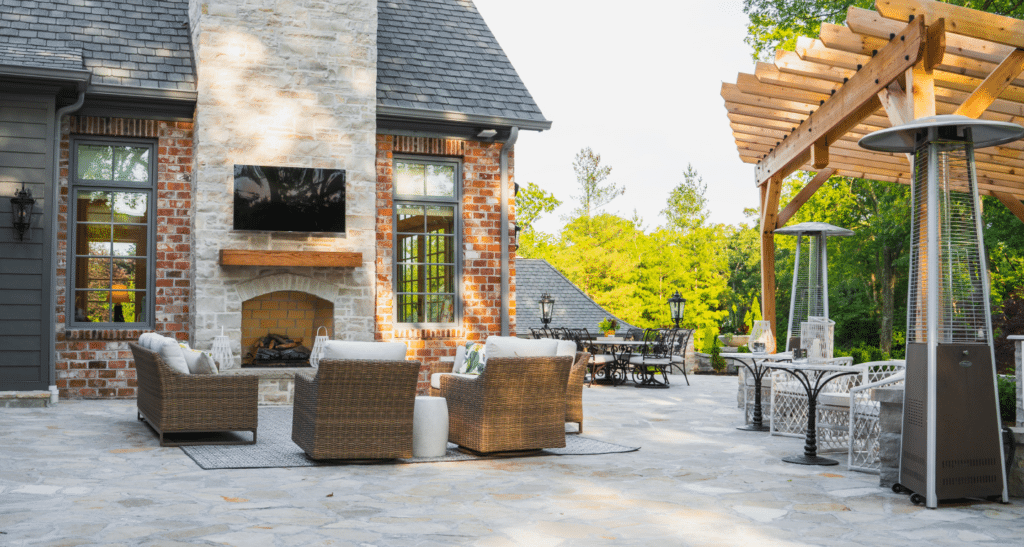
The patio is where life actually happens. Dinner parties, Sunday mornings, fire pit conversations at 10 p.m. Everything else in the yard orients around it, which is why placement is the most consequential decision in the entire design process.
It should flow naturally from the home’s interior, typically from a back door or kitchen exit, so that indoor-outdoor living feels effortless. Size matters just as much. A 10×12 slab works for a bistro table; if you’re envisioning a dining set, a lounge area, and a fire feature, you’re looking at 400 to 600 square feet minimum. Think about how you actually want to use the space before you think about what it looks like.
Then come the materials. The right choice is what works with your home’s architecture and the rest of your hardscape plan. As a Belgard Master Craftsman, Elevate Outdoor has access to exclusive product lines and extended warranties that most contractors simply can’t offer. Check out our article How to Choose the Right Paver Patio Color Palette to learn more about your options.
Retaining Walls: Function Meets Design
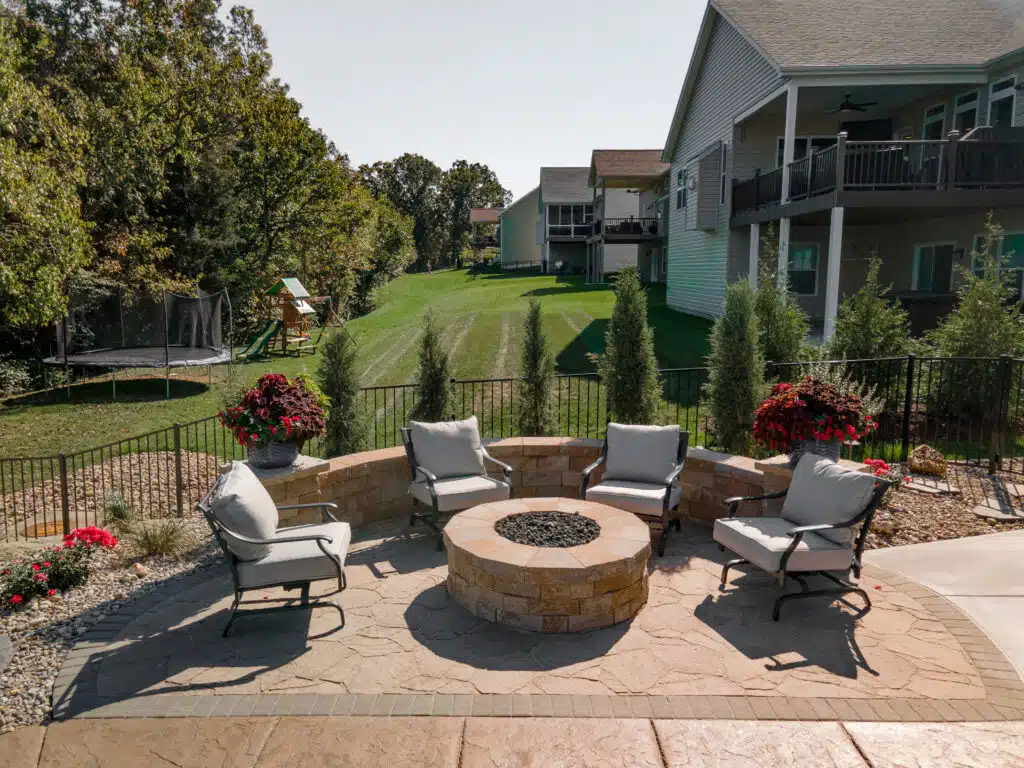
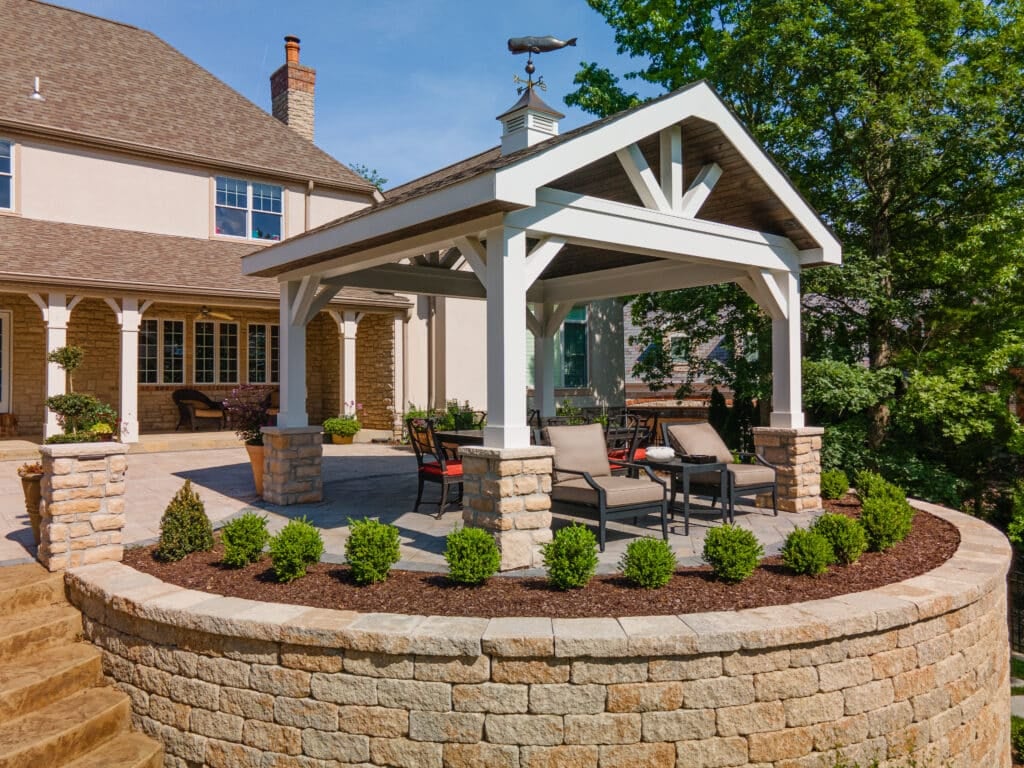
Retaining walls solve grade problems, create flat, usable zones out of sloped or unusable land, manage erosion, and work hand-in-hand with drainage systems. But a well-designed wall does something more: it defines the space.
Walls create edges, add architectural interest, and give the yard vertical dimension it wouldn’t otherwise have. A seat wall along the patio perimeter does double duty — structural on one side, seating on the other. And when wall materials reference the patio palette, the two elements read as one intentional composition rather than two separate projects.
Walkways: The Connective Tissue
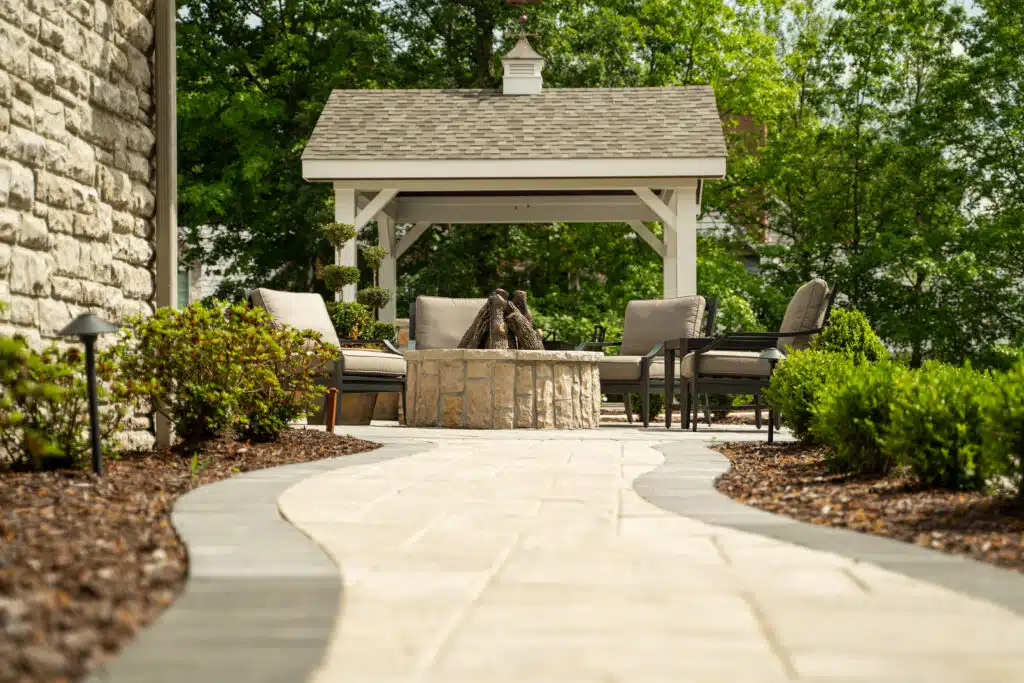
Walkways guide how people move through your property. They connect the driveway to the front door, the back door to the patio, and the patio to everything beyond it. Without them, a yard can feel like a collection of spaces that don’t know they belong together.
Width and function come first. A front entry walkway needs room for two people side by side, four to five feet at a minimum. A garden path can be more intimate. A connection between two heavily used outdoor zones needs to hold up in all weather. Material continuity comes next. A Grey Gorge flagstone walkway that pulls from the same stone family as the patio surround creates a visual thread that ties the whole property together. Finally, consider curvature: straight paths are direct and formal; curved paths are experiential and naturalistic. Neither is wrong, but both should be chosen on purpose.
The Principles Behind Great Landscape and Hardscape Design
Good landscape and hardscape design isn’t a formula, but there are principles that consistently separate spaces that feel custom and considered from those that look assembled over time.
Material continuity is your most powerful tool.
When your patio pavers, wall coping, and walkway surface all speak the same visual language, same color family, same texture register, same edge treatment, the yard reads as one cohesive outdoor room. When they don’t, even great individual elements look like three different contractors worked on the same property. Before you commit to any single material, think about everything. Bring samples together and look at them side by side in your actual yard.
Design for how you’ll live, not how it looks in a photo.
A patio built for aesthetics is sized for a camera angle. A patio built for your life is sized for the dining table you actually own, the space you need to pull chairs back from it, and the clear path around it without bumping elbows. Think about circulation — how do people move through the space? Is there a clear line from the back door to the grill? From the patio to the lawn where the kids play? Spaces that function well feel effortless to be in. That ease is what makes them feel luxurious.
Work with the land, not against it.
Yards that fight their natural grade almost always look forced. Yards that use terracing, natural stone steps, and retaining walls to celebrate grade changes look like they grew out of the property. When our designers walk a site for the first time, one of the first things they assess is the natural flow of the land, where water moves, where the natural viewing lines are, what the topography suggests about where spaces should live. That conversation starts before any pencil touches paper.
Scale and proportion matter more than most people realize.
An undersized patio under a large pergola feels cramped. An oversized entry walkway leading to a modest front door feels off. A retaining wall two feet taller than necessary looms instead of frames. Every element should be sized in relationship to what surrounds it, the width of a walkway relative to the plantings beside it, the height of a seat wall relative to the patio it borders, the patio footprint relative to the house itself.
Hardscape defines the bones. Softscape completes the picture.
The warmth, texture, and seasonal character of a space come from plantings, lighting, and lawn. A beautifully built paver patio surrounded by bare mulch doesn’t feel finished. The best projects weave hardscape and softscape together from the start — planting beds that frame patio edges, lighting that picks up wall coping at night, lawn that flows naturally to where the stone begins.
Common Hardscape Landscaping Mistakes to Avoid
Most hardscape landscaping regrets trace back to the same handful of decisions made too early, too fast, or without the full picture in view.
Designing elements in isolation.
You find a paver you love and commit to it. Six months later, you build a retaining wall in a different stone because it was on sale. A year after that, you pour a concrete walkway because it was the fastest option. Each choice made sense individually. Together, they look like three different projects on the same property. Fix: plan the full material system before you commit to any single element.
Skipping the grade and drainage conversation.
Every hardscape project is downstream of a drainage question — sometimes literally. Before a single paver is set, your design team needs to understand how water moves through the property and where it needs to go. Missouri’s clay soil expands when wet and contracts when dry, and any hardscape that doesn’t account for that movement will show the effects within a few years. Proper base preparation is the difference between a patio that lasts fifteen years and one that shifts after the first hard winter.
Choosing materials for the showroom, not the site.
A paver that looks stunning under showroom lighting can fall flat in your backyard’s specific conditions — morning shadow, afternoon sun, the undertones of your home’s brick or siding all affect how a material reads in context. Bring samples home. Look at them at different times of day. This is a 20-year decision; it’s worth the extra step.
Not planning for what comes next.
Most homeowners don’t build their entire outdoor vision in one project — they start with the patio and add features over time. The problem comes when those future additions weren’t accounted for in the original build. Running conduit or gas lines before the patio is poured costs almost nothing. Cutting through a finished patio three years later to do the same thing costs considerably more. Think two steps ahead, and make sure your designer does too.
Rushing the design phase.
A proper design process takes time, and that time pays for itself in the execution. It’s where materials get aligned, grade gets addressed, dimensions get confirmed, and everything that needs to happen before the crew arrives gets identified. Skipping it to save time almost always creates more of it later.
How the Elevate Outdoor Design-Build Process Works
Outdoor projects are exciting — but without a solid process, they get stressful fast. Here’s what working with Elevate looks like from first conversation to final walkthrough:
- Step 1: Show Us Your Space. One of our outdoor experts comes to your property at no cost, no obligation. We listen — not just to your wish list, but to how you use the yard, what frustrates you about it, and what you picture when you imagine it at its best.
- Step 2: Approve Your Design and Quote. Our design team presents a detailed 3D design of your outdoor space along with material selections and project costs. We work through any revisions until the plan is exactly right before anything moves forward.
- Step 3: Project Kickoff and Execution. Once you approve, your Project Supervisor establishes the start date and timeline. Our craftsmen get to work and communicate progress throughout — so you’re never left wondering what’s happening in your backyard.
- Step 4: Completion and Maintenance. At project completion, we meet to make sure you’re satisfied with every last detail. From there, we’re available to support you long-term through our maintenance services and project warranty.
As the only Belgard Master Craftsman in the Greater St. Louis area, our team installs over 20,000 square feet of Belgard products annually and brings 20+ years of hands-on experience to every project. That expertise shows up in the quality and longevity of what gets built.
Ready to Start Planning Your Hardscape Design?
The best outdoor spaces start with a conversation, about how you want to live outside, what your property needs, and what a finished space actually looks like when every element belongs together.
If you’ve been sitting on a backyard project, or if you’re starting to think seriously about what your outdoor space could be, now is a great time to get the conversation going. Let’s build something lasting, beautiful, and uniquely yours. Request a quote to get started today.