

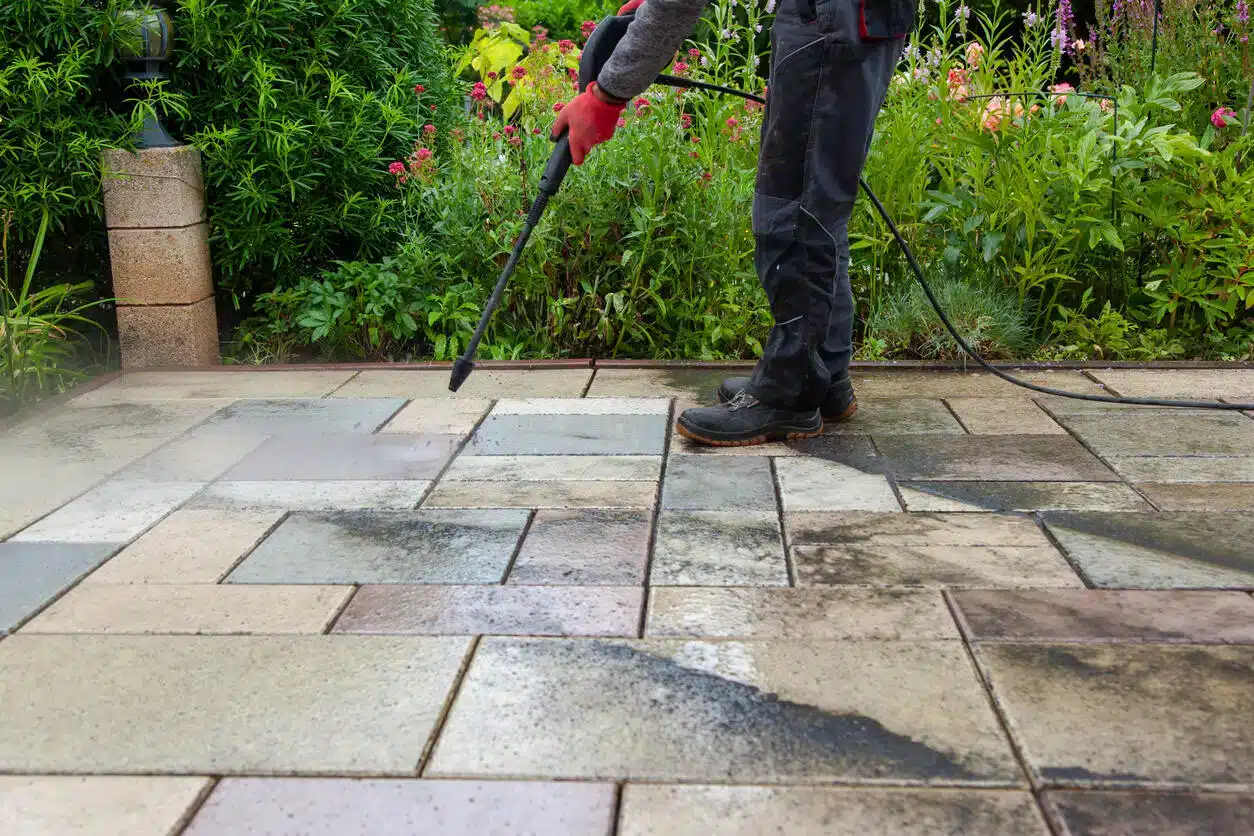
Patio restoration usually costs far less than tearing everything out and starting over, and in most cases you can do the core of it in a weekend.
Our guide walks through the three steps that clean, re-sand, and seal your pavers so the patio looks wonderful again, plus how to tell when it is time to call in a crew or replace instead.
What Is Paver Patio Restoration?
Paver patio restoration is the process of cleaning, re-sanding, and sealing an existing paver surface to undo the wear that time, weather, and traffic leave behind. It brings back color, locks the pavers back in place, and protects the surface going forward, all without replacing a single stone.
Can you restore faded pavers?
Yes. A thorough cleaning followed by a standard or color-enhancing sealer brings faded pavers back and protects the restored color from further UV fading.
Should You Restore or Replace?

What to check | Restore it if | Replace it if |
|---|---|---|
Pavers | They are sound, just stained, faded, or weedy | They are cracked or crumbling |
Base | It is solid and sits level | It has failed, and the surface is sinking or heaving |
Drainage | Water clears the surface normally | Pooling keeps undoing the surface no matter what you do on top |
If you land on replacement, our paver patio and walkway page covers how we rebuild on a base made for Missouri clay and freeze-thaw cycles, so the new surface lasts.
Is it cheaper to restore or replace a paver patio?
Restoration is almost always cheaper, since it reuses your existing pavers and base. Replacement only pays off when the pavers or the base have actually failed.
The 3 Steps to Restore a Paver Patio
Here are the three steps, in order:
Clean the pavers
Start by pulling any grass or weeds from the joints, then clear the surface. Wash each section with a pressure washer to lift loose debris, sand, and grime, keeping the nozzle back and moving so you do not etch the pavers. Follow with a paver-safe cleaning detergent per the label, and treat any oil or rust stains with a dedicated remover. Rinse thoroughly and let the surface dry fully, ideally 24 to 48 hours, because sealant and sand will not bond to a damp patio.
Re-sand the joints
Once the pavers are dry, use a putty knife to remove joint sand that is cracked, broken, or no longer holding, and run the pressure washer once more to clear it out. Then sweep fresh polymeric sand into the joints. Polymeric sand hardens once you activate it with water, so it locks the pavers in place, resists washout, and keeps weeds and ants from settling into the gaps.
Seal the surface
Sealing is the step that protects everything you just did. A quality paver sealer guards against UV fading, water, stains, and mildew, and it makes future cleanups easier. Water-based sealers are more forgiving and friendlier to surrounding plants, while oil-based sealers bond more deeply and last longer between coats but require covering nearby vegetation and, for attached patios, the house, and some states restrict them. Apply on a dry stretch of mild weather, and plan to reseal every two to three years for high-traffic patios.
How Often Should You Reseal Pavers?
For most patios, plan to reseal every two to three years, and every three to five for lighter-traffic walkways. An easy test is to pour a little water on a few pavers, since water that soaks in rather than beading means the seal has worn and it is time. Resealing on that rhythm is what keeps color from fading and joints from opening back up, so a restored patio stays restored.
How Do You Keep a Restored Patio Looking New?

A little upkeep protects the work:
- Sweep or blow off leaves and debris weekly, especially in fall, so organic stains and weed seeds do not settle in.
- Rinse the surface every week or two to clear pollen, dirt, and spills before they set.
- Treat spills quickly, blotting and then cleaning with a paver-safe product rather than acidic cleaners or wire brushes.
- Top up polymeric sand every few years as joints wear, so the gaps stay sealed against weeds.
- Watch for drainage issues like pooling or erosion, since standing water undoes sealant and sand fastest.
For inspiration on what a refreshed space can become, our top paver patio design options shows popular layouts and features worth planning around.
When Should You Call a Professional?
If the base has failed, drainage keeps undoing the surface, or a large area needs relifting and re-leveling, that is beyond a weekend refresh and worth a pro. We handle full paver restoration and rebuilds, and we will tell you honestly whether yours is a clean-and-seal job or a base problem before you spend on the wrong fix.
Want Your Patio Back Without Replacing It?
If you would rather restore than rebuild, we can bring your pavers back to life or tell you straight if the base needs more. Either way, you will know before you spend.
Book a paver patio assessment and we will help you decide between a refresh and a rebuild.