


Flower beds that look great all season need consistent flower bed maintenance, planned months before planting and carried out throughout the growing season.
Here is what a flower bed maintenance involves, what the plants cost, what the ongoing care runs in a year, and how to decide whether to hand it off.
What Is Flower Bed Maintenance?
Flower bed maintenance is a planned rotation of flowering plants through the highest-visibility beds and containers on a property, scheduled so something is always in bloom.
The spots that usually earn color first are the ones people actually see: the front entry, the walk to the door, containers flanking the garage, the bed outside the kitchen window, and whatever your guests pass on the way to the patio.
What Does Flower Bed Maintenance Include?
- Bed preparation. We pull the old material, turn the soil, and regrade the bed so it drains. Annuals have one season to perform, and we are not going to spend three weeks of it waiting for them to recover from bad soil.
- Plant selection. Our designers choose varieties for the light, the exposure, and the heat they will have to sit through, not just for color.
- Installation. Our crews set every plant by hand and space them so the bed reads as full instead of as a grid. We can tighten that spacing when you want the bed finished on day one, which costs more in plant material.
- Watering. We keep new annuals watered through establishment. Those first three weeks are where most homeowner-planted beds fall apart.
- Deadheading and pinching. We pull spent blooms every visit so plants keep producing instead of setting seed. This is the single task that separates beds still looking good in August from beds that peaked in June.
- Weeding and feeding. We weed on every visit and feed the beds on a schedule through the growing season.
- Changeover. We pull the spent rotation, prep the bed again, and plant the next one.
- Fall cleanup. We clear and cut back the beds so they go into winter clean.
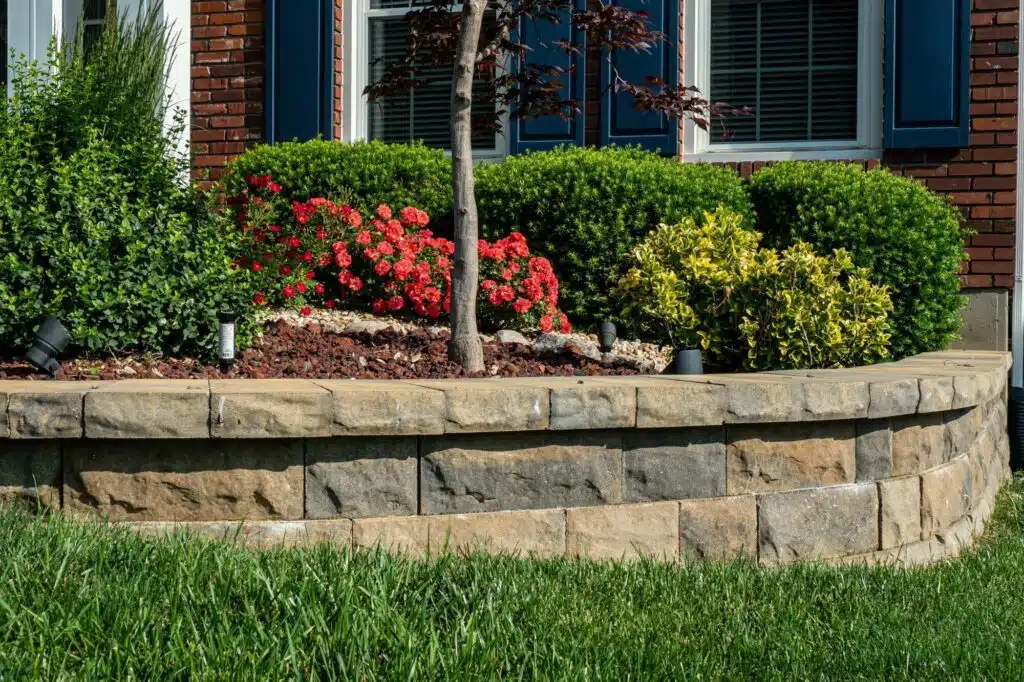
How Much Does Flower Bed Maintenance Cost?
Plant material is the part you can plan around early. These are planning ranges, not a quote. We price each property after we walk it.
Plant type | Installed cost | Maintenance level |
|---|---|---|
Flowering annuals (4-inch pots to 1 gallon) | $15 to $30 per plant, per season | High |
Native perennials (1 quart to 1 gallon) | $20 to $40 per plant | Low |
Ornamental grasses (1 to 3 gallon) | $30 to $60 per plant | Low to medium |
Native shrubs (3 to 5 gallon) | $60 to $150 per plant | Low to medium |
Ground cover | $10 to $20 per square foot | Low to medium |
As a rough gauge, a 100 square foot bed planted for full coverage takes somewhere in the neighborhood of 100 four-inch annuals, which puts a single rotation around $1,500 to $3,000 in plant material for that one bed.
For ongoing care across the whole property, we tell homeowners with professionally designed spaces to budget $3,000 to $12,000 a year. That figure covers lawn care, seasonal planting, bed maintenance, mulching, and seasonal cleanups together, and where you land inside it depends on property size and how much of the work you hand over. Our landscape budgeting guide breaks that down alongside install costs for every other plant category and a phasing framework if you are building the beds out over a few years.
Why Are Annuals the Highest-Maintenance Plant You Can Choose?
Of every plant category we price, flowering annuals are the only one we rate as high maintenance. It is worth understanding before you commit to a bed full of them.
They have one season.
A perennial that struggles in June can recover by August and come back stronger next year. An annual that struggles in June is finished. Everything it is going to do, it does in a few months, which is why the prep and the timing matter more than they do anywhere else in the landscape.
They need water on a schedule.
Shallow roots and heavy bloom production mean annuals dry out faster than anything else in the bed. Our watering instructions cover what new plantings need through establishment, and a functioning irrigation system takes most of this off your plate.
They stop blooming if nobody deadheads them.
Once a plant sets seed, it has done its job and slows down. Pulling spent blooms every few weeks keeps it producing.
Should You Plant Annuals or Perennials?
Most beds we plant use both. Perennials and grasses carry the structure, and annuals fill the gaps with color that changes.
Annuals | Perennials | |
|---|---|---|
Bloom | Continuous through their season | Weeks at a time, on a set schedule |
Lifespan | One season | Return year after year |
Cost | $15 to $30 per plant, repeated each rotation | $20 to $40 per plant, planted once |
Upkeep | High: water, deadhead, feed, replace | Low: seasonal cutback and division |
Best for | Entries, containers, anywhere you want reliable color on a date | Bed structure, low-maintenance properties, long-term value |
If the maintenance side gives you pause, native perennials and ornamental grasses do most of the visual work for a fraction of the ongoing attention. Our piece on the reasons to grow native plants covers how they perform once established and why they hold up in our climates.
What Drives Your Flower Bed Cost Up or Down?
Square footage for plantings
This is the biggest lever by a wide margin, and it is the easiest one to adjust. Concentrating color in three high-visibility beds usually reads better than spreading it thin across nine, and it costs considerably less.
Bed rotations
Each changeover means new plant material plus the labor to pull the old rotation and prep the bed again. Running two rotations instead of three is the fastest way to bring an annual color budget down without the beds looking neglected.
Plant size
Four-inch pots cost less and need a few weeks to knit together. Gallon material looks finished the day it goes in. If the bed has to peak for a specific weekend, larger material buys you certainty.
Bed irrigation
Beds on a working irrigation system need far less hand watering, which shows up directly in the labor line. We handle spring activation and fall winterization and our technicians are certified in backflow testing, so the system is checked before the season it has to carry.
What condition the beds start in
A bed with clean edging, fresh mulch, and amended soil takes less work every visit for years afterward. Beds that have been left alone need that groundwork before color goes in, which lands in the first year rather than every year.
What Happens When Bed Maintenance Gets Skipped?
Beds do not fail suddenly. They drift, and the drift is slow enough that most people stop seeing it.
- Spent blooms stay on the plant, it sets seed, and flowering slows down by midsummer
- Weeds establish root systems that are far harder to remove than they were in May
- Mulch thins out, the soil surface dries faster, and everything needs more water to hold the same look
- Bed edges blur into the lawn, which makes even healthy planting read as unkept
- Annuals that were never replaced leave gaps, and the bed looks patchy rather than designed
None of this is dramatic on any given week. It is just that the difference between a bed that gets visited and one that does not becomes obvious around August, which tends to be when people are outside the most.
How Does Bed Work Fit Into a Maintenance Plan?
Seasonal planting and bed maintenance are two of the services we fold into a customized outdoor maintenance plan, alongside lawn care, mulching, irrigation, and seasonal cleanups. Most of our customers choose the Pinnacle plan, which adds white-glove account management.
The reason people move to a plan usually has less to do with the flowers than with everything around them:
- One team instead of separate companies for mowing, irrigation, beds, and cleanups
- Fewer unfamiliar crews coming and going on your property
- Work scheduled at the right point in the season instead of whenever you remember to call
It starts with a complimentary consultation. We walk the property with you, look at what the beds actually need, and build the plan around your property rather than around a package.
How Does Flower Bed Maintenance Change Across Our Markets?
We plant in the Midwest and Northeast, which require different planting and rotation schedules.
Midwest: heat is the constraint
The season runs long, which is an advantage, but July and August are hard on cool-season annuals. Varieties that look excellent in May can go leggy and stop blooming by midsummer, so the summer rotation has to be chosen for heat tolerance rather than for what looked best at the garden center in spring.
Northeast: the window is the constraint
A later last frost and an earlier first frost make for a meaningfully shorter growing window. That usually means fewer rotations and a heavier lean on containers, which can be planted earlier and moved or covered when a cold night arrives.
Our St. Louis, Kansas City, and Adirondack region pages list the services running in each market alongside local project examples.
Frequently Asked Questions
Flowering annuals run $15 to $30 per plant installed, per season, for 4-inch pots up to 1-gallon material. Larger plants cost more and look finished sooner.
Let’s bring your brand to life—contact us to start your custom landscape design.
Homeowners with professionally designed spaces typically budget $3,000 to $12,000 a year for ongoing landscape maintenance, which covers lawn care, seasonal planting, bed maintenance, mulching, and seasonal cleanups together. Where you land depends on property size and how much you hand over.
Perennials cost slightly more per plant but are planted once, so they cost less over time. Annuals are repurchased every rotation, which is what makes them the more expensive choice across a few years.
Regular planting is the permanent structure of a bed: shrubs, perennials, grasses, and trees. Flower bed maintenace is the rotating layer of annuals planted on top of that structure and replaced as each season ends.
You do not need it, but annuals are the planting that benefits from it most. Without irrigation, someone has to water consistently through establishment and through the hottest stretch of summer.
Usually one of three things: the variety was not selected for the heat it had to sit through, spent blooms were never removed so the plants set seed, or the bed dried out repeatedly during establishment.
Yes. Flower bed maintenance are services we build into a customized plan, so they can be added to what you already have.
Ready to Hand the Beds Off?
If the beds have been on your list every spring and keep sliding, that is usually a sign the work has outgrown the time you have for it.
The consultation is complimentary, and you will come away knowing what your beds need, what a season of color would run, and whether it makes sense to fold it into a maintenance plan. Schedule your consultation and we will take it from there.