
Your driveway is the first thing people see. It’s the opening line of what your home says about itself. So when it starts cracking, fading, or just looking tired, the question isn’t whether to do something about it. It’s what to do, and whether a paver driveway is worth the investment.
Here’s what you need to know before making that call.
Why Homeowners Are Choosing Paver Driveways Over Concrete and Asphalt
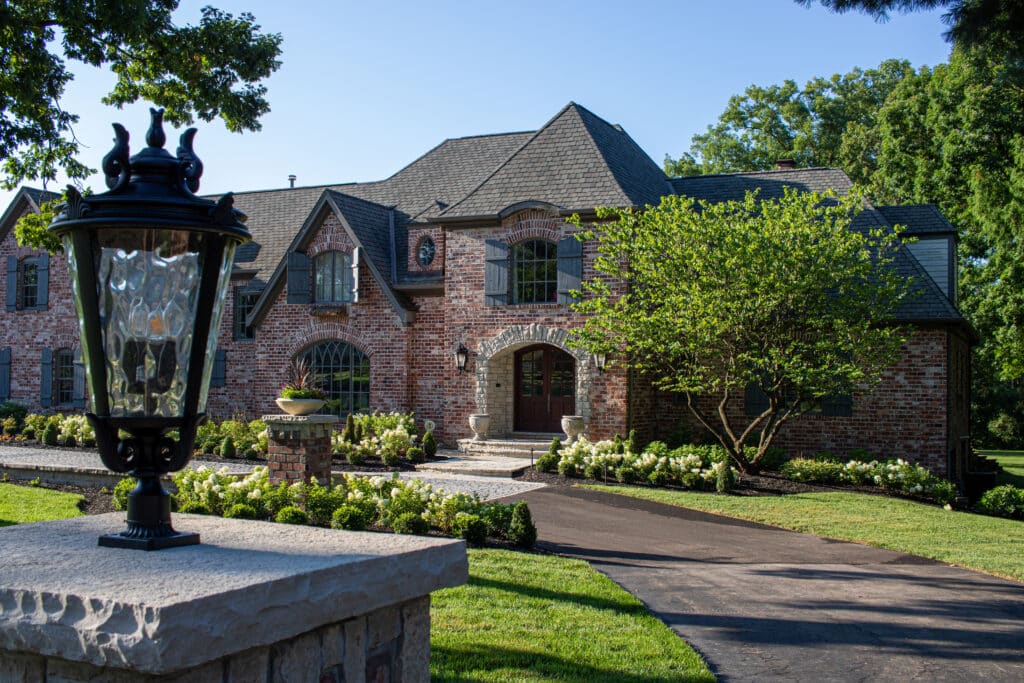
Concrete driveways crack. Asphalt driveways soften in summer heat and go brittle in the cold. Both require costly repairs and eventually full replacement. Paver driveways work differently. Built on an interlocking system, individual units flex and move slightly as the ground shifts beneath them, which matters a great deal in St. Louis. Our clay-heavy soil expands when wet and contracts when dry, and our freeze/thaw cycles can swing 40 degrees in a single week. Those are exactly the conditions that destroy rigid surfaces. Pavers handle it because they’re engineered to move with the ground rather than fight it, and when a section does need attention, you replace those units rather than tearing out the whole driveway.
The design flexibility is just as compelling. From classic cobblestone to tumbled pavers with a centuries-old texture to sleek large-format slabs for a modern home, paver driveways offer a level of customization that poured concrete simply can’t touch.
What Do Paver Driveways Actually Cost?
Concrete paver driveways typically run $30–$40 per square foot installed, which for most residential projects means a total investment in the range of $15,000 to $40,000+ depending on size, design, and site conditions. Natural stone options like flagstone or bluestone step up to $40–$50 per square foot due to material costs and more specialized labor. As a reference point, one of our St. Louis-area projects, a 1,500 sq ft paver driveway and walkway, curved retaining wall, and new planting beds, came in as a complete package in the $25,000 to $49,999 range.
The variables that move the number most are:
Material selection
Concrete pavers are the most affordable and come in the widest variety of styles. Clay, porcelain, and natural stone step up in price but bring their own durability and aesthetic advantages.
Base preparation
A paver driveway is only as good as what’s underneath it. Driveways require a deeper compacted base than patios to handle vehicle weight, and projects with drainage issues or full surface removal will cost more. Those costs protect the investment.
Design complexity
A simple rectangular layout costs less than one with curved edges, decorative borders, inlays, or integrated steps.
Stone Paver Driveway vs. Concrete: A Cost Comparison That May Surprise You
Poured concrete runs $16–$30 per square foot installed, so the upfront gap is real. What most homeowners don’t factor in is what concrete costs over time. In Missouri’s climate, a poured concrete driveway may need patching within five to seven years, resurfacing after that, and full replacement within 15 to 20. A properly installed paver driveway can last 30 to 50 years. When you run those numbers across the life of your home, plus the resale value a quality driveway adds, the math usually favors pavers.
How Long Do Paver Driveways Last?
With proper installation and basic maintenance, a paver driveway can easily last 30 to 50 years. Some installations last longer. The critical word there is “proper installation,” and this is where the quality of your contractor makes all the difference.
The longevity of any paver driveway comes down to the foundation. Our ICPI-certified foremen have been building to Interlocking Concrete Pavement Institute standards in Missouri since 2004. ICPI certification means your crew understands not just how to lay pavers, but how to engineer the base layer correctly, with the right depth, the right compaction, and the right materials, so the surface performs as intended for decades.
The other factor that protects a paver driveway’s lifespan is maintenance, and it’s easier than most people expect. Sweep it regularly, rinse it off when it gets dirty, and have it re-sanded and sealed every few years. Sealing protects against staining, enhances the color, and shields the surface from the kind of wear that accumulates in high-traffic areas. At Elevate Outdoor, we include sealing as part of our turnkey installation packages for clients who want a fully hands-off experience.
When individual pavers do get damaged, an oil spill that stains or a unit that chips, you replace that section. You don’t resurface the driveway. That repairability is something concrete will never offer.
Material Options for Paver Driveways: From Flat Stone Pavers to Classic Cobblestone
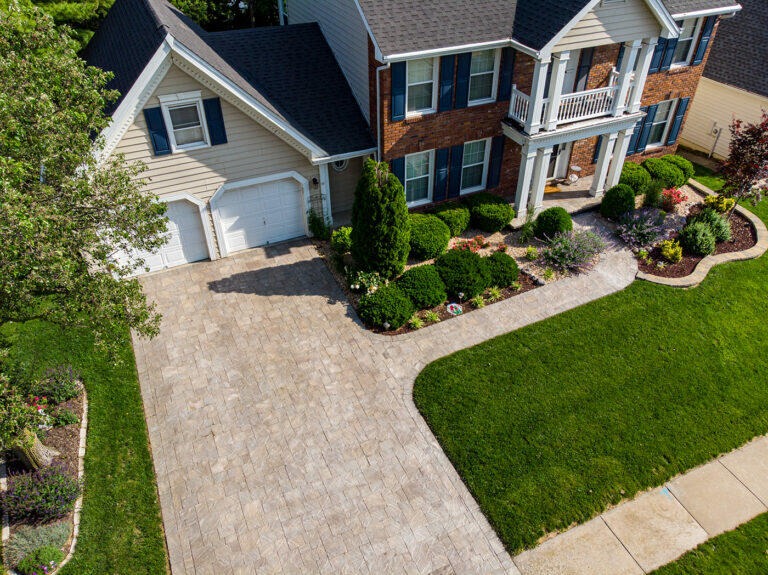
At Elevate Outdoor, we work with four leading manufacturers, Belgard, Unilock, Techo-Bloc, and Romanstone, so we’re never locked into a single product line. Here’s how the main material types break down:
Concrete pavers
The most popular choice for driveways and the most versatile. Available in dozens of colors, finishes, and profiles, from smooth and contemporary to tumbled styles that carry a rich, weathered texture. Strong performance across all budgets.
Clay pavers
Color runs all the way through the material rather than sitting as a surface layer, so clay pavers don’t fade over time. A great choice if you want a classic, traditional red-brick look with genuine longevity.
Porcelain pavers
The premium tier. Dense, virtually non-porous, and highly resistant to staining, scratching, and frost damage. The large-format, clean-line aesthetic pairs especially well with contemporary architecture.
Flat stone pavers
Natural flagstone, bluestone, and slate for homeowners who want something truly one-of-a-kind. Every piece carries its own variation in color, texture, and edge profile, and they work beautifully in curved entryways or homes with a craftsman or cottage feel. Top of the price range, but the result simply can’t be replicated with manufactured product.
Our design team provides 3D renderings, material palette recommendations, and honest guidance before any ground is broken.
Ready to Transform Your Driveway? Let’s Talk.
A paver driveway is one of those investments that pays you back every single day. It pays you back in curb appeal every time you pull in. It pays you back in avoided maintenance and repair costs over the years. And it pays you back in home value when it’s time to sell.
If you’ve been thinking about replacing your driveway, whether you’re dealing with cracked concrete, worn-out asphalt, or simply a front approach that doesn’t reflect the home you’ve built, we’d love to talk through what’s possible.
Connect with an Elevate Outdoor expert today and get your free driveway consultation. Let’s build something lasting, beautiful, and uniquely yours.