
There’s a particular kind of frustration that comes with having a nice backyard that you never actually use. The patio is there. The furniture is there. But when you step outside, something is missing. There’s no shade when you need it. No sense of destination. Nothing that makes the space feel finished or intentional.
That’s usually the moment when people start searching for pergolas, pavilions, and arbors. They know one of these structures is the answer. They’re just not sure which one fits their yard, their lifestyle, or their budget.
If that sounds familiar, you’re in the right place. This guide covers the differences between all three, what you can realistically expect to spend, and how to figure out which one is worth the investment for your specific situation.
What’s the Difference Between a Pergola, Pavilion, and Arbor?
Before we talk numbers, it helps to understand what you’re comparing.
Pergolas
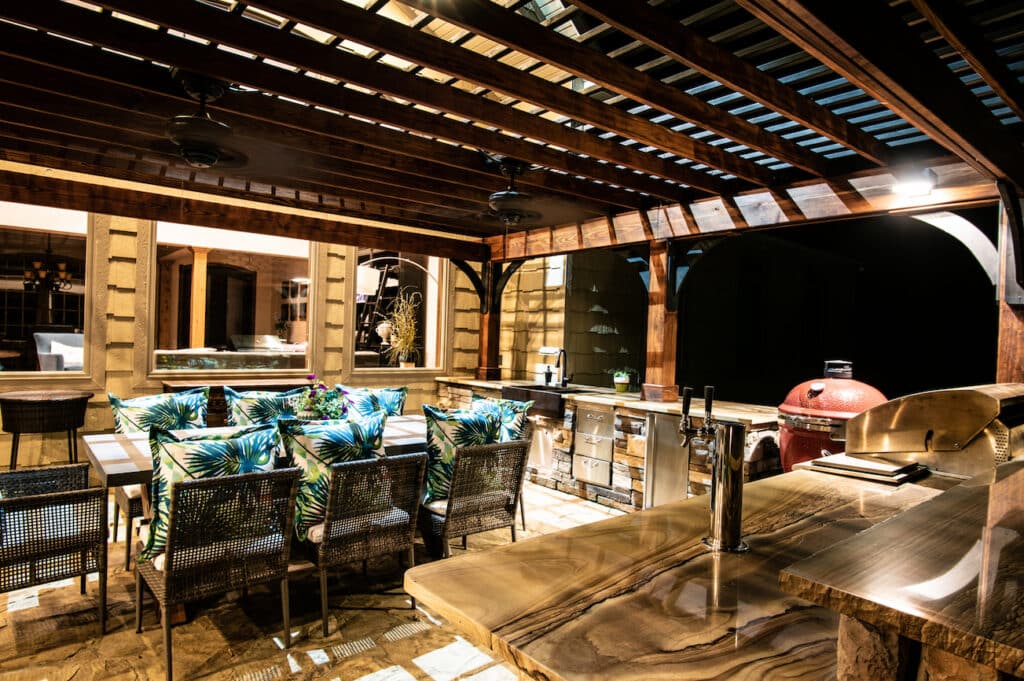
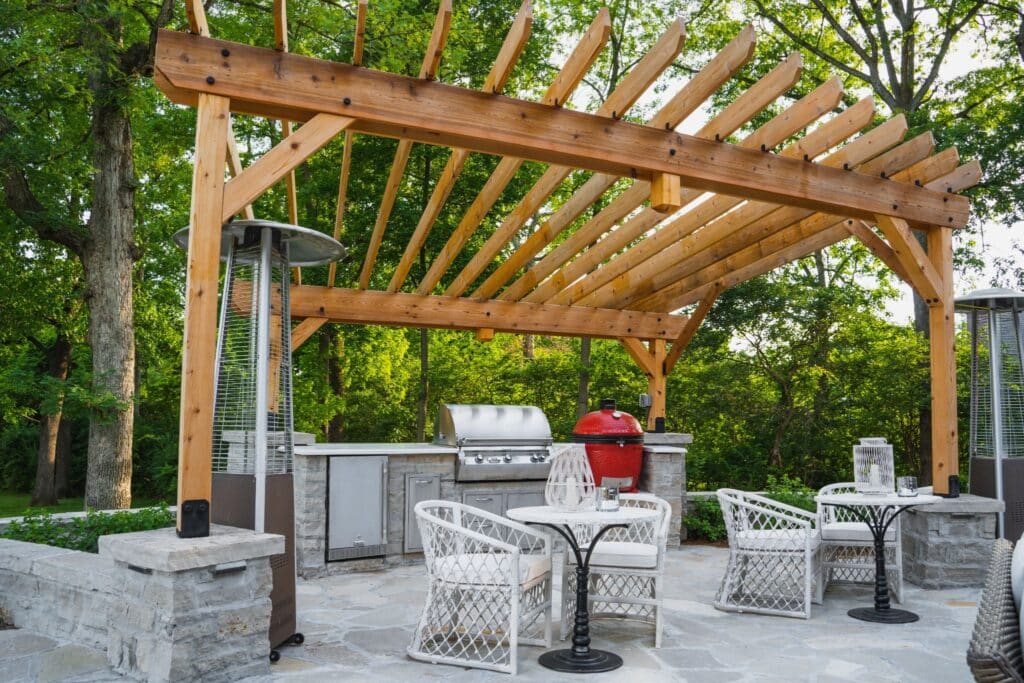
Pergolas have an open lattice or rafter roof that filters sunlight rather than fully blocking it. They can be freestanding or attached to the house, and they’re a popular choice for homeowners who want to define a patio without closing it in. String lights, climbing vines, and ceiling fans all work beautifully on a pergola. They’re one of the most requested features in Elevate Outdoor’s builds, often paired with custom stone patios or outdoor kitchens.
Pavilions
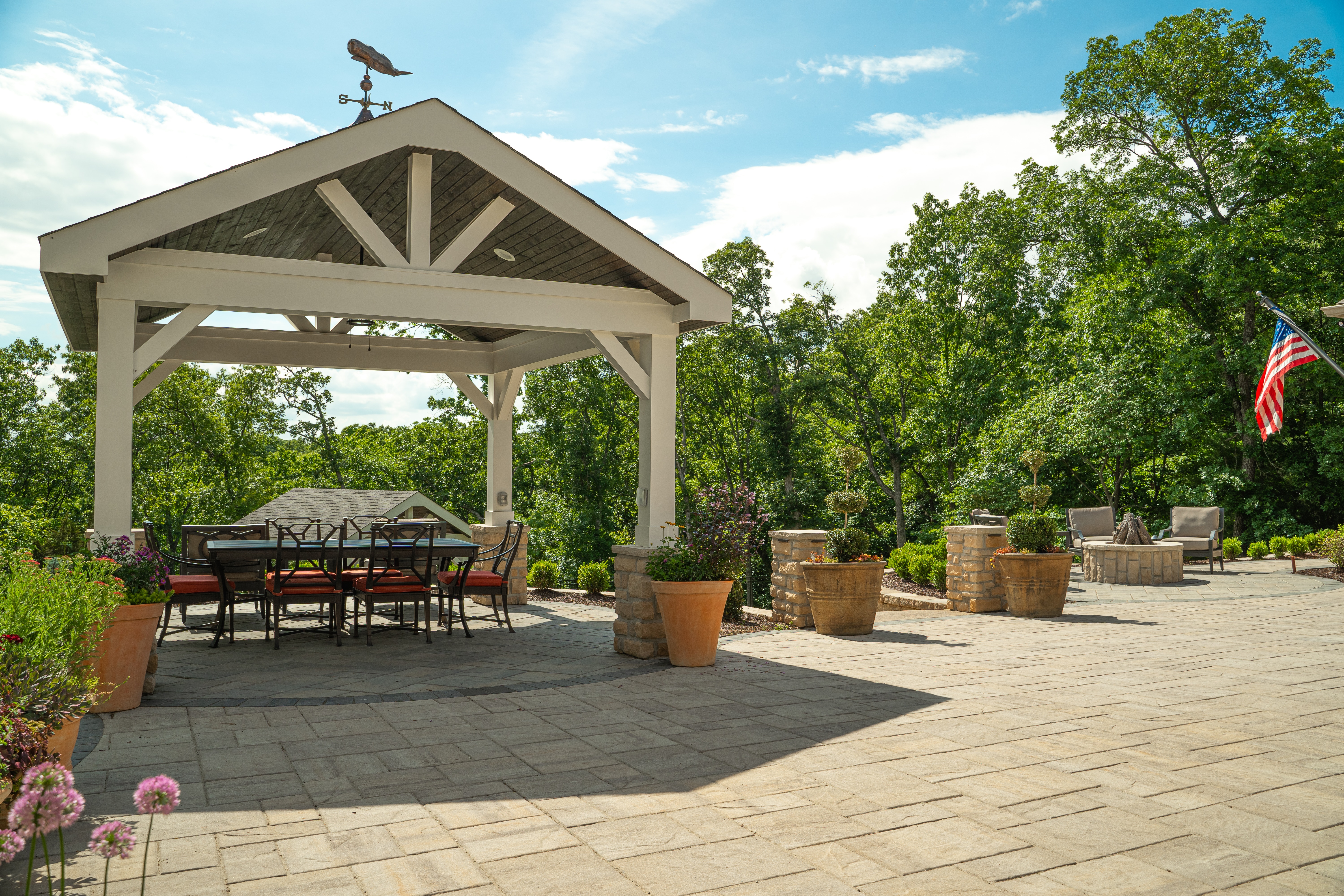
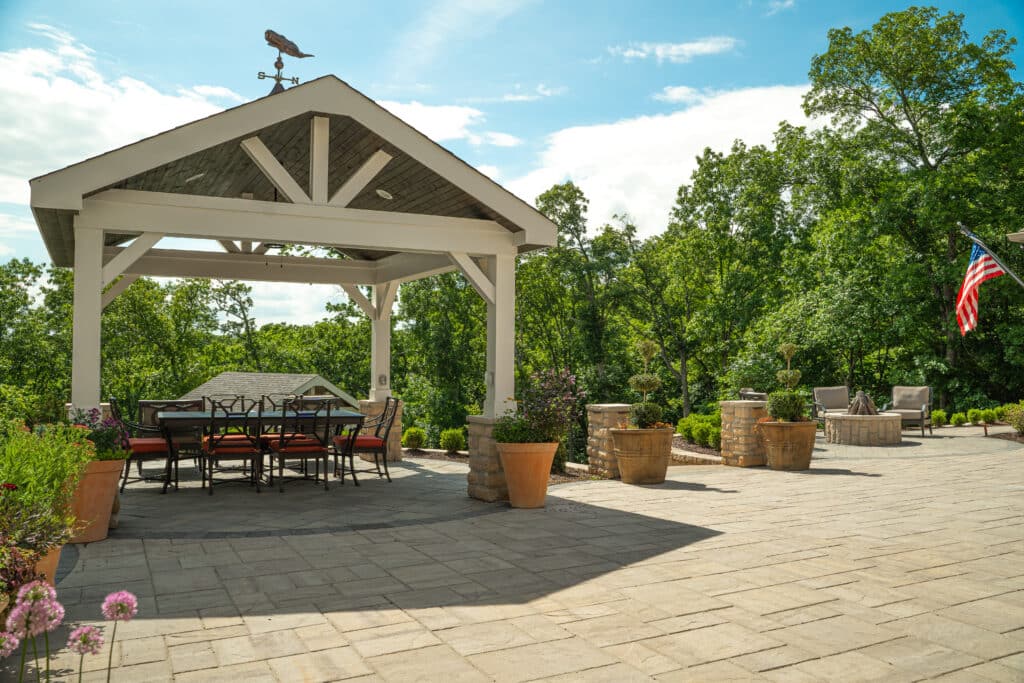
Pavilions have a fully enclosed, solid roof. Think of it as a permanent outdoor room. That solid roof means real protection from rain and full sun, so you can use the space year-round rather than only on perfect-weather days. Pavilions anchor larger outdoor builds, the kind that includes an outdoor kitchen, a bar, or a full entertaining area.
Arbors
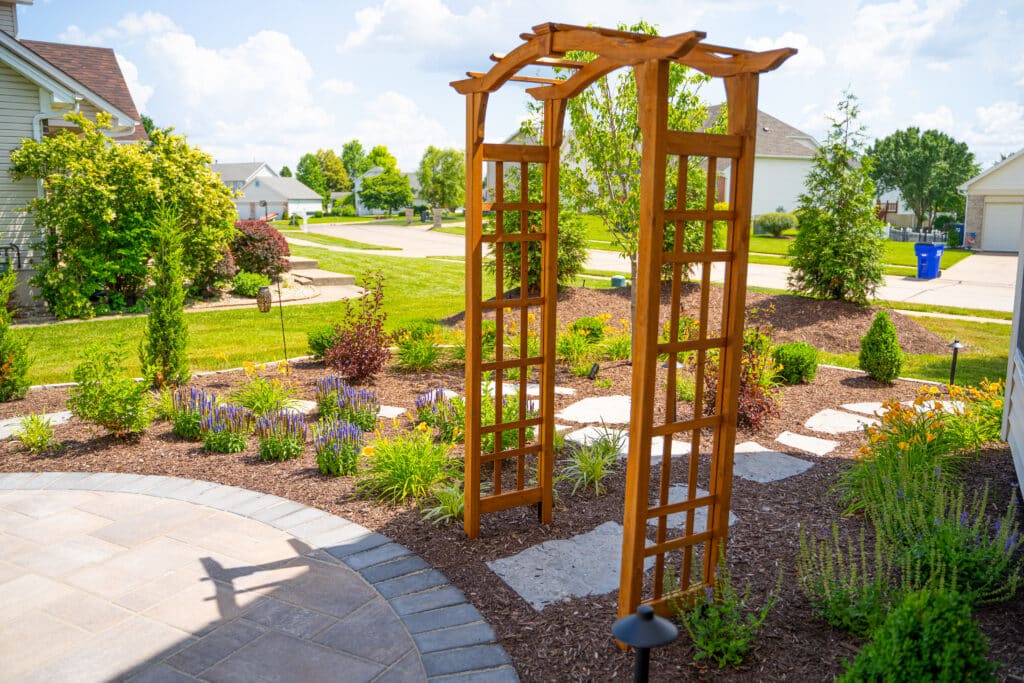
Arbors are the smallest and most decorative of the three. Typically arched or gabled, they mark passageways, frame garden entries, or serve as a focal point in a planting bed. They add real visual interest, but they’re not designed to create shade over a seating area. They serve a different purpose, and that’s reflected in their cost.
Pergola Cost: What You Can Expect to Pay
The honest answer: it depends. Pre-engineered kits from big box stores start at a few hundred dollars, but they’re built to fit every yard, which means they fit no yard perfectly. Material quality varies, and they rarely hold up as well as a custom-built structure over time.
For a custom pergola designed and built specifically for your space, most homeowners spend somewhere in the range of $15,000 to $20,000 or more. Cedar and pressure-treated wood sit at the more affordable end. Composite and aluminum cost more upfront but tend to make more financial sense over a 10 to 20-year horizon. Add-ons like integrated lighting, retractable shades, or ceiling fans push the number higher.
A few of the key variables that drive pergola cost:
- Square footage. A 12×12 pergola over a small patio is a very different project from a 20×24 structure covering an entire outdoor living area.
- Freestanding vs. attached. Attached pergolas that connect to the home typically require additional structural work and permitting.
- Material selection. Wood requires ongoing maintenance (staining, sealing) while composite or aluminum materials are more durable with less upkeep.
- Site conditions. Sloped yards, concrete footings, and proximity to the home all affect labor time and cost.
Pavilion Cost: When You Want Something More Substantial
Pavilions cost more than pergolas, and there’s a simple reason for that: they’re more complex structures. A solid roof requires framing, roofing materials, and a more substantial foundation, and depending on the design, permits and inspections may be required. Most homeowners who invest in a custom pavilion spend somewhere in the range of $38,000 to $50,000+. A single-pitch structure on a gravel pad is a very different project from a timber-frame pavilion with a standing seam metal roof, cedar ceiling detail, and integrated electrical.
That cost tends to feel justified because of the return on usability. A pergola is great on a sunny afternoon. A pavilion works on a rainy Tuesday in April and a cool October weekend. That year-round versatility changes how much a family uses the space, and it also opens the door to features that don’t make as much sense under an open roof. An outdoor kitchen, a bar, a large dining area, these all come together more effectively when there’s a solid roof overhead.
Arbor Cost and When an Arbor Makes Sense
Arbors are the most accessible of the three structures from a cost standpoint. A simple, professionally installed arbor typically starts around $2,000 and up, depending on size, materials, and design complexity. Custom arbors with decorative woodwork or metal detailing will sit toward the higher end of that range.
The key question with an arbor isn’t really about cost. It’s about whether an arbor is the right tool for what you’re trying to accomplish. If your goal is shade over a patio, an arbor won’t get you there. If your goal is to add a beautiful passageway between your front yard and back garden, frame a view, or give climbing roses something to grow on, an arbor might be exactly right.
Pergola Cost vs. Value: Is It Worth the Investment?
Most homeowners researching pergola cost are really asking a simpler question: will this pay off? The short answer is yes, but it depends on how it’s done.
Outdoor structures rank among the higher-ROI home improvement projects, particularly in a market like St. Louis where the outdoor living season is long enough to change how a family uses their home. A well-designed pergola or pavilion adds daily value by turning an underused patio into a space people want to spend time in, not just property value on paper.
Where homeowners lose money is in the execution. Kits that weren’t built for the local climate, structural issues from improper installation, or a structure that ignores the rest of the yard — those are the scenarios where the investment doesn’t hold up. That’s why Elevate Outdoor’s process starts with design before anything gets built. Every project begins with an on-site consultation, concept development, and a 3D rendering so you can see your pergola in context before a single post goes in the ground.
How to Choose: Pergola or Arbor? Pavilion or Pergola?
Still not sure which direction is right for you? Here’s a simple way to think about it:
An arbor makes the most sense if you want a decorative accent, a garden entry point, or a vertical structure for climbing plants. It’s a beautiful finishing touch, not a functional outdoor room.
A pergola makes the most sense if you want partial shade over a patio, a structure that defines your outdoor space without closing it in, and flexibility on budget and scale. It’s the most popular choice for a reason.
A pavilion makes the most sense if you want year-round usability, full protection from rain and sun, and a structure that can anchor an outdoor kitchen, bar, or large entertaining area. If you want to use the space even when the weather isn’t cooperating, a pavilion is the answer.
When in doubt, the best next step is a conversation with someone who has built all three and can look at your specific yard, your specific goals, and your specific lifestyle and tell you honestly what will serve you best.
Ready to Find Out What’s Possible in Your Yard?
Every outdoor space is different, and the right structure for your neighbor’s yard might not be the right one for yours. The team at Elevate Outdoor has been designing and building custom pergolas, pavilions, and arbors in the Greater St. Louis area for over 25 years. From the first consultation to the final reveal, the process is designed to be collaborative, transparent, and actually fun to be part of.
Request a quote today and let’s start the conversation. No pressure, no obligation. Just an honest look at your outdoor space and what it could become.