
Updated September 2026
Why invest in an inground fire pit, when, in the words of Ina Garten, “store-bought is fine?”
The thing is, this isn’t “good vanilla” we’re talking about. Choosing between a custom-built stone fire pit or fireplace and a store-bought one is a matter of safety, style, and potential enhancement to your home value. That’s why inground fire pits outshine their store-bought counterparts. In this article, we’ll explore the many benefits of inground fire pits, including cost, fuel options, sizing, their impact on safety and home value, and why one might be the perfect addition to your backyard.
They Are Safer Than Store-Bought Options
Fire pit safety is a top priority. Inground fire pits offer a level of safety that portable, store-bought fire pits simply can’t match. Because they are installed flush with your patio or slightly recessed, they reduce the risk of tipping over, a common hazard with portable models. Additionally, the stationary nature of an inground fire pit means you won’t need to worry about accidental knocks or gusts of wind blowing the embers around, making them a safer option for homes with children and pets.
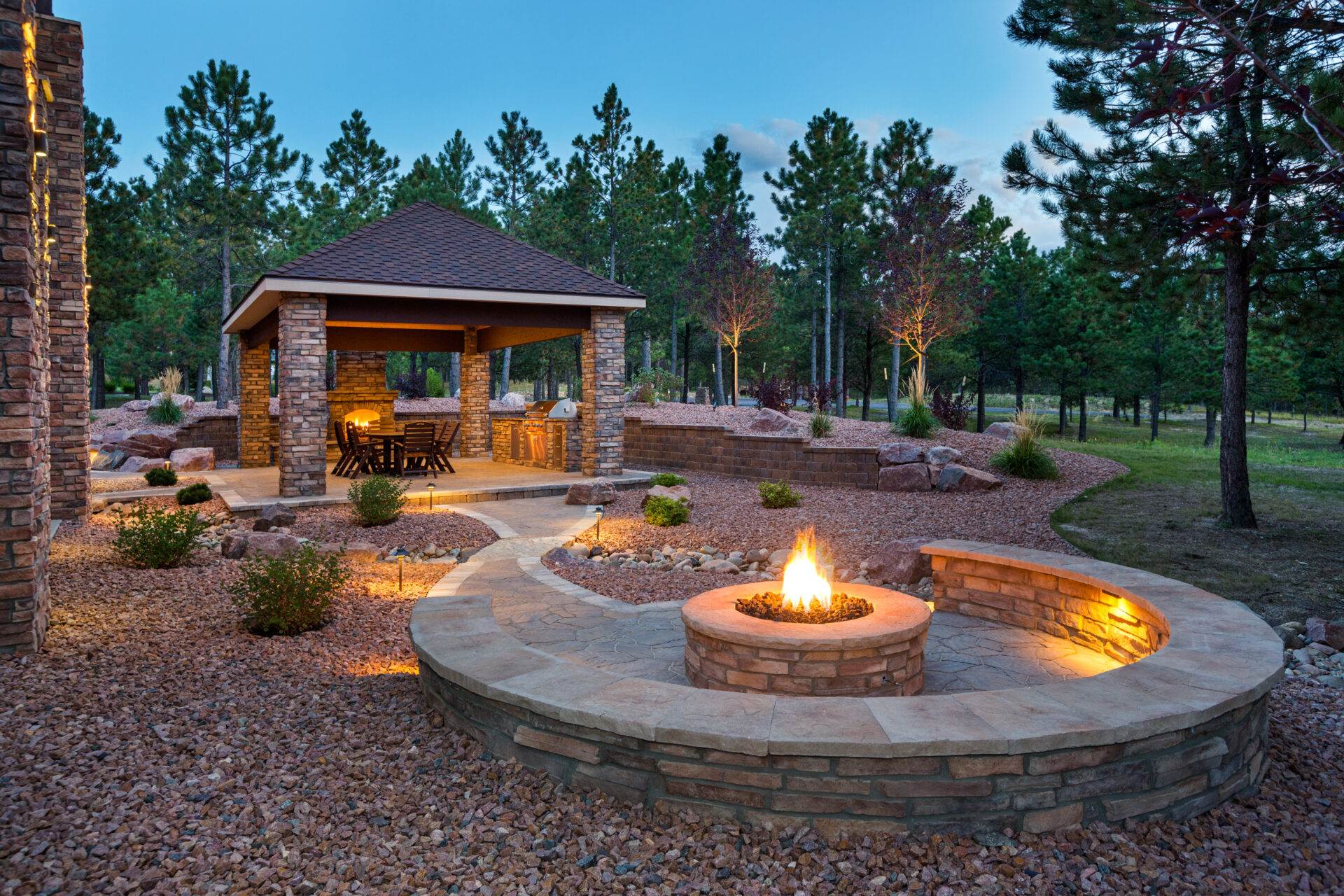
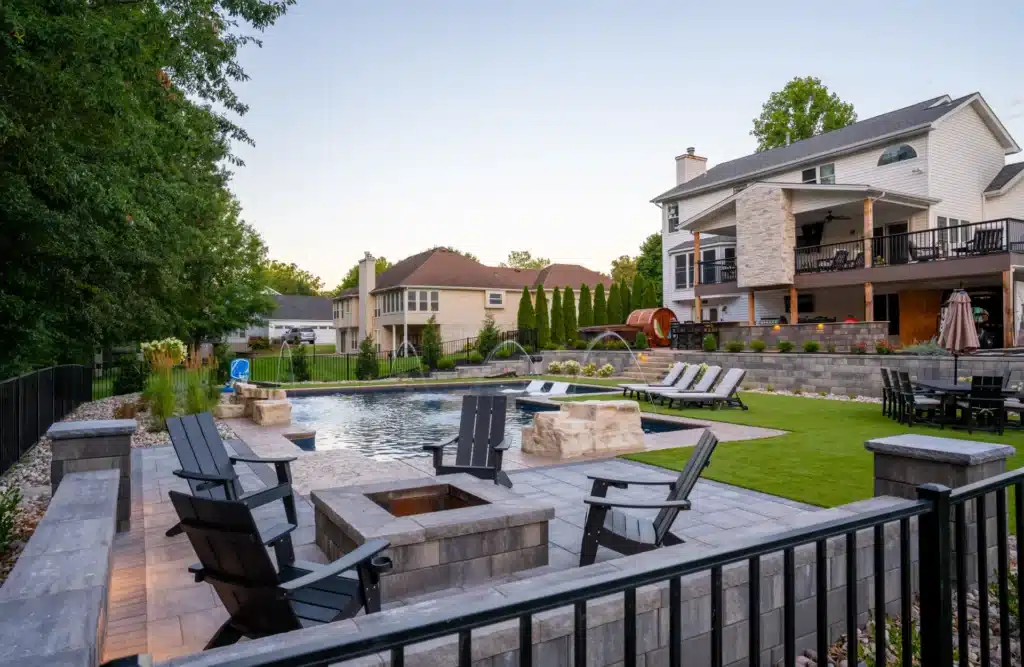
Inground fire pits can also be custom-designed with safety-enhancing features. You can add a border or seating wall around the pit, which enhances safety by providing a clear barrier and adds to the beauty of your outdoor space.
5 Fire Pit Safety Tips to Remember
- Keep your fire pit at least 10 feet away from structures, trees, or flammable materials.
- Be aware of wind direction and strength to prevent sparks from flying into unwanted areas.
- Always keep a bucket of water, sand, or a fire extinguisher close by just in case.
- Clear any dry leaves, sticks, or other debris around the fire pit to avoid accidental fires.
- Never leave the fire unattended, and double-check that it’s completely extinguished before heading inside.
They Offer Superior ROI and Increase Home Value
Investing in a built-in fire pit can yield substantial returns, both in terms of immediate enjoyment and long-term value. Unlike store-bought fire pits, which can deteriorate over time, a built-in fire pit is a permanent fixture that enhances the overall value of your home.
According to a study by the National Association of Realtors (NAR) and the National Association of Landscape Professionals, inground fire pits deliver a 67% return on investment. For example, a $6,000 custom fire pit will typically add about $4,000 to the value of your home. Add in the safety benefits, the enjoyment added to your outdoor space, and no worries about replacement, and the cost to go custom makes complete sense.
How Much Does an In-Ground Fire Pit Cost?
Fire pit pricing rarely appears online, so here is the shape of it.
Our fire pits start at $3,500 installed. The final pricing depends mostly on material and whether you’re running a gas line.
Four Factors That Influence Fire Pit Pricing
- Gas line installation: Running a gas line to the pit adds cost, particularly on longer runs or where the line crosses hardscape. Wood burning pits skip this entirely.
- Seat wall integration: A curved seat wall around the pit roughly doubles the masonry work and produces the built-in look most homeowners picture. It also covers the seating for that area permanently.
- Patio tie-in: Adding a pit to an existing patio involves cutting into finished pavers and reinstating them around the new feature. Building the pit and patio together costs less than adding one to the other later, which is useful to know before finalizing a patio design.
- Retrofit versus new build: Access shapes the labor. A backyard a machine can reach costs less to build in than one where material arrives by wheelbarrow.
Phasing is a practical option when the full scope runs past this year’s budget. We build projects in stages regularly, holding one cohesive design across two phases or ten, so the pit can arrive with the patio or a season later and still look like it was planned together.
Read our guide to paver patio costs
Gas vs. Wood Burning In-Ground Fire Pits
This is the first decision most homeowners make, and it comes down to how the space will be used.
Wood burning delivers the experience people picture when they imagine a fire pit: open flame, the smell, the sound, and the ritual of building it. Installation costs less with no gas line involved, and fuel costs almost nothing with a wood source on hand. In exchange, it takes ten to twenty minutes to get going, it produces smoke that travels with the wind, and ash removal is part of the routine. Wood suits households where the fire is the event.
Gas trades ceremony for frequency. A gas pit lights instantly, produces no smoke or ash, and holds whatever flame height you set, which is why gas pits get used on weeknights, in shoulder seasons, and for twenty minutes before dinner. Installation costs more because of the line. Gas also fits well for homes with close neighbors, an HOA with smoke provisions, or anyone in the household who is sensitive to smoke.
|
Wood burning |
Gas |
|
|
Install cost |
Lower |
Starting at $3,500; gas line required |
|
Cost to run |
Minimal with a wood source |
Modest, metered |
|
Time to light |
10 to 20 minutes |
Instant |
|
Smoke and ash |
Both |
Neither |
|
Cleanup |
Regular ash removal |
None |
|
Best for |
Weekend gatherings, the full fire experience |
Frequent use, close neighbors, shoulder seasons |
Our recommendation: if the pit anchors weekend entertaining, burn wood. If you want the fire pit that gets used on a Wednesday in March, run the gas line.
In-Ground Fire Pits Are Built to Last
Built-in fire pits are designed to be permanent fixtures in your outdoor space, constructed with high-quality materials that can withstand the elements year after year. Portable fire pits are usually made from thin metal that can rust, warp, or degrade over time. In-ground fire pits are constructed from stone or brick to withstand constant heat, cold, moisture, and wind exposure.
What In-Ground Fire Pits Are Built From
Material choice shapes both how the pit looks and how long it performs, and there are three paths worth knowing.
- Natural stone: Full stone construction produces a one-of-a-kind result, since no two pieces match, and it weathers the way stone does. Every piece gets fitted individually, which places it at the top of the range for material and labor.
- Manufactured wall block: Systems like the Belgard Ashlar Tandem Wall reproduce the look of cut stone in a modular format that installs faster and costs less. As the only Belgard Master Craftsman in the Greater St. Louis area, we install more than 20,000 square feet of Belgard products a year, and we back that work with a five-year workmanship warranty.
- Brick and paver construction: When a pit should read as part of an existing patio rather than as an addition to it, matching the surrounding paver is the way to get there. We build fire pits into paver patios so the feature looks original to the design.
Maintaining Your Fire Pit
Regularly cleaning out ash and debris, checking for any minor cracks, and resealing the stonework or masonry every few years is all that’s needed to keep your fire pit in top condition. Portable fire pits, on the other hand, may require frequent replacement of parts or even entire units due to wear and tear.
What Size Should Your In-Ground Fire Pit Be?
Sizing works best when the plan starts with the circle of people rather than the pit itself.
|
Interior diameter |
Seats |
Best for |
|---|---|---|
|
36 inches |
4 |
Small patios, couples, tight spaces |
|
42 to 48 inches |
6 to 8 |
Most homes, and the range we build most often |
|
60 inches and up |
10 or more |
Large gatherings, though people spread beyond one conversation |
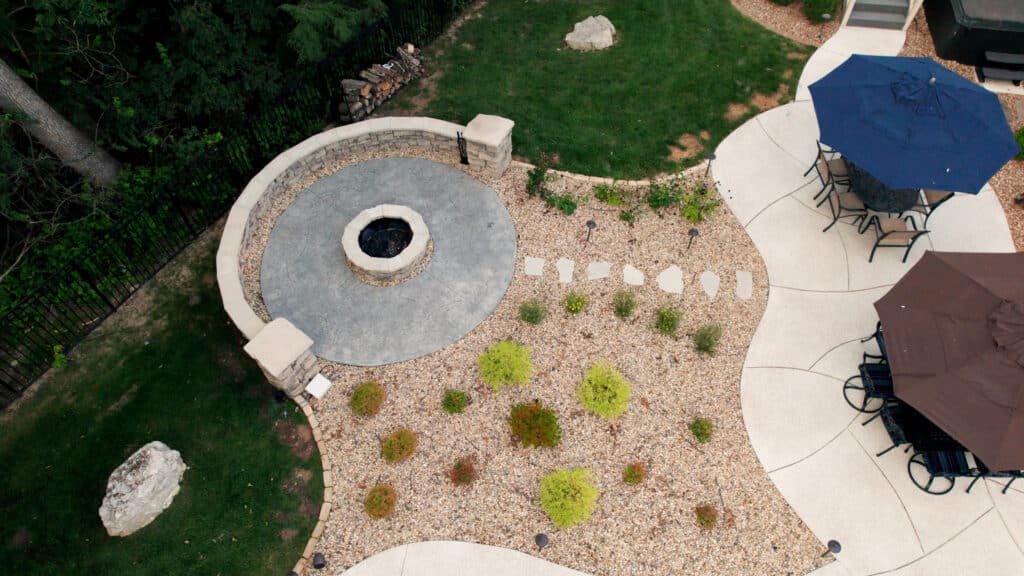
Clearance is where the planning pays off. Allow roughly three feet between the outer edge of the pit and the front of the seating so guests can pass behind the chairs comfortably, and size the patio to match. A 48-inch pit with proper clearance and a ring of chairs works best on a patio area around 18 to 20 feet across, which is more space than most homeowners anticipate. We size the pit against the patio it will sit on, so the finished feature has comfortable seating around it.
The safety clearances above still govern: keep the pit at least ten feet from structures, trees, and flammable material.
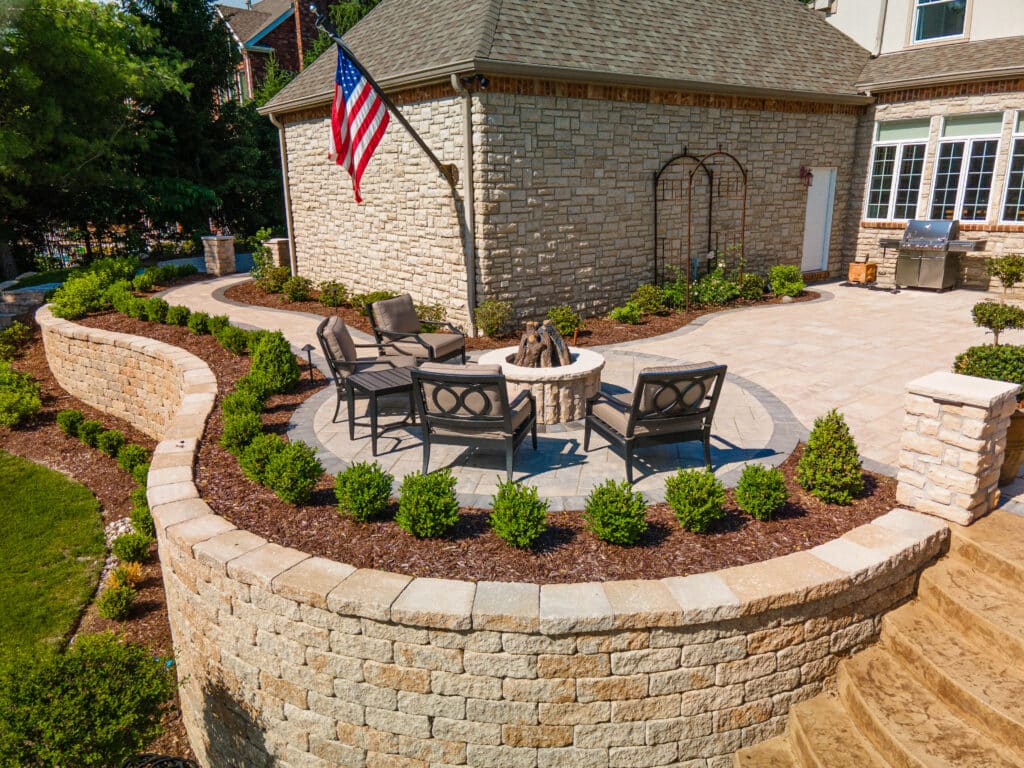
How seat walls and retaining walls work together with a fire pit to shape a gathering space:
See retaining wall and fire pit design ideas
Fire Pit vs. Fire Table vs. Outdoor Fireplace
We build all three, so here is how they compare.
- In-ground fire pit: Everyone faces inward around a shared center, which is why conversation flows well around a pit. It seats the most people per dollar and sits low enough to preserve sightlines across the yard. Choose this if the goal is a group of people talking around a fire.
- Fire table: A raised fire feature at table height, usually gas, that doubles as a surface for drinks and plates. It suits smaller patios and works with standard height furniture rather than low seating. Choose this if the space is compact or the feature should earn its footprint twice.
- Outdoor fireplace: A vertical masonry structure with a chimney that throws heat in one direction and functions as a wall. It defines an outdoor room, blocks wind, screens a sightline, and extends the season further than either alternative. It also carries the highest cost of the three. Choose this if you want to create an outdoor room and use it in November.
They Enhance Aesthetic Appeal and Enjoyment
When you’re envisioning your perfect backyard, chances are you’re thinking of a space that’s both beautiful and functional. Inground fire pits deliver on both fronts. Their design is highly customizable, so you can choose the shape, size, and materials that best fit your landscape.
Browse trending fire pit design styles
In-ground fire pits also enhance the overall enjoyment of your outdoor space because they integrate directly into your patio design, creating a natural gathering spot for friends and family. Whether you’re roasting marshmallows under the stars or enjoying a quiet evening with a book, the ambiance created by an inground fire pit is unmatched by its portable counterparts.
Check out this custom stone fire pit, alongside a cobblestone driveway, retaining walls, a grand staircase, and a cabana:
Tour the Windcastle Whale project
Do You Need a Permit for an In-Ground Fire Pit?
Requirements vary across St. Louis municipalities, so the answer depends on your address and your fuel.
Wood-burning pits are usually the simpler case, though many municipalities set minimum setbacks from property lines and structures, and some restrict open burning under certain conditions. Gas pits involve a gas line, which typically calls for a permit and an inspection.
If you’re in an HOA, check its rules too. HOA provisions covering fire features, smoke, and permanent structures are often stricter than the municipal code.
We handle permitting as part of the build, coordinating scheduling, permits, and material procurement, so the approval work stays off your plate. Pulling the permit before construction also keeps the placement settled from the start.